Sunday, May 13, 2018

A Sign From God?

This blog was originally posted in 2018, but looking at it tonight and noticing the relevance of God's Foreknowledge in our lives - I want to share it once more with all my Friends Ministry eNewsletter Friends and especially with those Friends new to my list. 

Personally I believe it is good to sometimes look back and see what God has done in our lives.  We cannot live in the past - but we can, and should, learn from what it has taught us, or what it may teach us today.

I have a number of good historical novels in my personal library - and some of them I have read 2, 3 times.  Each time I read them I see something I did not see before, so it is like reading the book for the first time. 

The greatest example of finding new "golden nuggets" in reading and rereading is the Bible, God's Word.  How many times have you read a Scripture passage, and then say to yourself, "I never noticed that before."  That is a benefit of continuing to consistently read God's Word.

A great example happened to me in 1998.  Dory and I were temporarily living in Moreno Valley, California, and we were attending a local church in that city.  One Sunday the pastor was teaching on Genesis 3, the deceit of the Serpent, the Old Adversary, and how he tricked Eve into eating from the forbidden fruit - and the pastor taught that when she did, she gave the forbidden fruit to Adam, her husband, who was with her and he ate.

When the pastor said that Adam was with her, I thought, "No, that is not in the Bible.  He must be ad-libbing, adding what he thinks probably happened.  But he should not be teaching that as though it is in the Bible."  I decided I would go to him privately after the service and ask why he taught it like that. 

In the meantime, I opened my Bible - and guess what?  Looking at Genesis 3:6 I found the words "She also gave to her husband WITH HER, and he ate."  I had never noticed those words "WITH HER" before.  I learned something new that day - something I had never noticed in previous readings.

Genesis 3:6, "So when the woman saw that the tree was good for food, that it was pleasant to the eyes, and a tree desirable to make one wise, she took of its fruit and ate.  She also gave to her husband WITH HER, and he ate."

In my original 2018 post, the photo used was taken in 1970 when I was home for the funeral of my step-dad, Russell Arthur.  The photo was taken the day after the service when mom and I were taking my cousin, Libby, to the bus station for her to return home to Birmingham.  I have had this photo for many years - and I just today noticed something very unusual in it.


Do you see the cross (actually a telephone pole) sitting above my head?   Hmmm?   Was God telling me, many years later, that in 1987 I would meet a man, Pastor Sam Lacanienta, who would point me to the cross and to eternal life?

In 1970 I was very much into the world and far from being a Christian believer.  But looking back today, I have to wonder.   My step-dad, Russell, was born and grew up in rural Russellville, Alabama, and left there to serve in the Army in World War 2.   He met and married my mom circa 1948. 

When I was a young teen, he worked for a while at the Gibson Venetian Blinds shop in Sheffield, Alabama (in the building which later became the famous Muscle Shoals Sound Studio) and sometimes I would go with him to help in the installations.  The shop was owned by a close family friend, Pastor Gibson, who preceded Russell in death.

Russell's service and internment was at a small country Baptist country church outside of Russellville, Alabama.  After the service, leaving the church sanctuary, my mom and Mrs. Gibson walked up to me.  Mrs. Gibson looked at me and said, "Do you know that you look like Billy Graham?  One day I want to see you preaching on television just like him."

Since I was far from being a believer, but did not want to be rude to that lovely lady and family friend, I just thought to myself, "Lady, you are out of your mind!"   At that time, I was already thinking ahead to the following weekend when I would fly back to Southern California. 

I had made plans to take my girl friend and her mom and dad to a night club in Garden Grove, California, to see a group I really enjoyed, The Leland Four.  The group was entertaining at the Playgirl Club in Garden Grove and I was really looking forward to seeing them again.  That was my kind of preaching in those days.

Fast forward to 1987 when I did become a Christian believer - and I would have been so blessed to be even a tiny bit as good a Christian witness as Billy Graham.  Since that blessed life changing transformation at a Bible study in 1987, I am content and happy with the writing ministry God has given me - and I pray that He will help me be more effective in that ministry.

But imagine my surprise today, 2018, as I was collecting photos to use in a Mothers Day collage - I noticed that cross sitting above my head.  Wow!  I have had this photo in my collections since 1970 - and I just today noticed that cross sitting above my head!  A sign from God of my future life, which in His omniscience He could see - but I could not?  Or just an overactive imagination? 

Call it what you will - but I see that as a sign from God that He foreknew my Christian faith in the not too distant future - while I was still living in the world of night clubs, parties, and fast friends.

Yes, praise God, I believe that was symbolic of the cross of Jesus Christ calling to me even then.  Later when my brother, Bob, and I used to talk before his promotion to heaven - we both agreed that neither of us could remember a time in our lives when we did not believe that God, Jesus Christ, and His Word were real.  It just took me a long time to turn and walk His way.

I recall a story I read in Our Daily Bread, Fall 1991 issue.  It was written by Henry Bosch and tells of a missionary to the Kiowa Indians.

The first missionary to the Kiowa Indians was a woman named Miss Reside.  After living with the Indians long enough for them to know what it meant to be a Christian, they began calling her Miss Aim Day Co.

Explaining the significance of this name, Chief Bigtree said, "When we Kiowas see anyone on the wrong trail, we call out, 'Aim day co,' which means 'Turn this way.'  Our sister came to us from a far land and found us on the wrong path and in great danger.  She stood and called to us and said, 'Turn this way.'  Then she showed us the Jesus road.  God bless Miss Aim Day Co."

The Lord Jesus declared that there are only two paths to take in life.  One is the narrow way that ascends to life eternal; the other is the broad way that descends to the pit of destruction (Matthew 7:13-14).  And He tells us in Scripture that He is "the Way."

John 14:6, "Jesus said to him, “I am THE WAY, the Truth, and the Life. No one comes to the Father except through Me."

Jesus has not promised an easy life, the world's praise, or great material riches for following Him.  But He richly rewards those who take the narrow road.  He forgives their sin, gives them eternal life, and assures them that they will go to heaven.

Miss "Aim Day Co" did not stay in her comfort zone.  She went to where the Indians lived, she went to their comfort zone.  I'm quite sure she did not start beating them over the head with non-stop Scripture or demand that they learn her "Christianese" language.  No, I'm sure that she first learned how to tell them, in their own language, "Turn this way!  Aim day co!"

Every believer is an evangelist, a witness, an ambassador for the Lord.  With all earnestness, let's point others to Jesus.  Like Miss Aim Day Co, let's urge people, "Turn this way!"

Even back in 1970 when this photo was taken, Jesus Christ was calling my name in love - and later, in 1987, Pastor Sam Lacanienta was telling me, "Turn this way!"  Praise God they both loved me enough to make that difference in my life, in my eternal life.  Thank you, Lord, and thank you, Pastor Sam.
 
God bless, have a wonderful, blessed day,

Bill
Click on the image to enlarge:

Monday, May 7, 2018

How Often Have We Heard These Excuses And/Or Justifications?

HOW OFTEN HAVE WE HEARD, "I can't go to church. I am not good enough" ~ OR ~ "I can't go to church. I'm a sinful person" ~ OR ~ "I can't go to church. They will not accept me"?

Yet, in the Bible, Jesus Christ makes it very clear that He did not come to praise we believers for being so perfect, for we are not. We are only "forgiven sinners." He came, died, and rose again to offer Life, Eternal Life, to all of us - all who have believed, or will believe - and especially to those still trapped in and living in the secular world's benighted and preferred world of unBiblical lifestyles. The secular world may tell you that those lifestyles are the new "norm" for all the world. But the Bible tells us:


1 Corinthians 6:9-10, (nkjv). "Do you not know that the unrighteous will not inherit the kingdom of God? Do not be deceived. Neither fornicators, nor idolaters, nor adulterers, nor homosexuals, nor sodomites, nor thieves, nor covetous, nor drunkards, nor revilers, nor extortioners will inherit the kingdom of God."

The eternal question, the one which will determine every person's eternal destiny, is: Will YOU believe the world - or - will you believe the Word of God? Jesus Christ came to bless, not save the righteous - but, most importantly, He came to save and bless those who are still lost. We are told that in these Scripture passages:


Mark 2:17 (nkjv), "When Jesus heard it, He said to them, 'Those who are well have no need of a physician, but those who are sick. I did not come to call the righteous, but sinners, to repentance.'"

Luke 19:10 (nkjv), "For the Son of Man has come to seek and to save that which was lost."

Luke 5:32 (nkjv), "I have not come to call the righteous, but sinners, to repentance."

Romans 3:10-12 (nkjv), "As it is written: 'There is none righteous, no, not one; There is none who understands; There is none who seeks after God. They have all turned aside; They have together become unprofitable; There is none who does good, no, not one.'"

Pass this on. Jesus Christ came to save YOU regardless of your sins, regardless of the lifestyle you are currently living, regardless of any and all your sins - past, present, or future - if YOU will only "believe and receive" Him as your Lord and Savior (John 1:12).

 We are assured of that in Ephesians 1:13 (paraphrased here for personal understanding) that if, "after YOU hear the Word of Truth, the Gospel of your salvation; . . . having believed, YOU will be sealed with the Holy Spirit" - meaning that the Holy Spirit will, from that moment on, resides within you (guiding you, teaching you, convicting you so that you may repent and correct your errors). 

And we are told that the Holy Spirit will reside in you, never leaving you, until the day of your redemption, the day you leave this mortal earth through death or the Rapture to be with Him eternally. And, Jesus Christ gave us these two amazing promises: Revelation 3:20 (nasb), "Behold, I stand at the door and knock; if ANYONE hears My voice and opens the door, I will come in to him and will dine with him, and he with Me."

Note: "Anyone" means exactly that - "Anyone" down through the ages, who will hear His voice, hear Him ringing the doorbell of their heart, and will open it to receive Him - that person WILL dine with Him, Jesus Christ, eternally.

John 10:27-29 (nasb), "My sheep hear My voice, and I know them, and they follow Me; and I give eternal life to them, and they will never perish; and NO ONE will snatch them out of My hand. My Father, who has given them to Me, is greater than all; and NO ONE is able to snatch them out of the Father's hand."


Note 1: "No one" means exactly that - NO ONE! No power on earth or in heaven, and especially not the believer himself/herself - can snatch the believer from the hands of God. And, no, that believer, once sealed and indwelled with the Holy Spirit - "cannot" evict the Holy Spirit and walk away from God.

Note 2: "Eternal" means "no beginning and no ending." Jesus Christ has existed eternally (no beginning) - and together with Him, we who believe and receive Him will live eternally (no ending) with Him, in fellowship with Him, dining with Him, loving Him - eternally.

So, my Friend, if you do not currently have a church home - whether you are a believer who has not found a church where you feel that you fit - or you are not yet a believer and feel that we believers will reject you - don't worry, just come visit us. We welcome YOU!

Most importantly, let me emphasize that it is not the people in a church who can receive you, or reject you. That is up to Jesus Christ alone - and He will NOT reject you when you come to Him. If you live in the Southern California area, or have a friend or loved one living in our area who needs a loving, Godly church family - we will be thrilled to include YOU in our church family.


We are: International Bible Baptist Church

Located at:
5932 Challen Avenue, Riverside, CA 92503

Sunday Services:
Morning Worship at 10:00 AM ~ Sunday School at 1:30 PM ~ Afternoon Worship at 2:30 PM

Bible Study / Prayer Meeting:
Every Friday evening at 7:00 PM - in our 5932 Challen Avenue church facility Assembly Room.

Come, join us, and bring a friend, or two or three. We will welcome you all (all y'all if you are Southern) with open arms and a Godly loving heart.


God bless, have a wonderful, blessed day,

Bill


Saturday, May 5, 2018

The Mediocrity Beast Is Running Rampant In America ~ The Negative Impact Of The #MeToo Movement

THE MEDIOCRITY BEAST IS RUNNING RAMPANT IN AMERICA ~ to the detriment of every aspect of our American life.  Having lived through the technology expansion, and virtual explosion, of the 1960s race to reach the moon, I see the comparative positive effect on our American way of life birthed by the technological race to the moon and further into space - versus the negative effect on our American culture and lifestyle birthed by Feminist Activism such as the #MeToo movement.

In the 1960s/70s/80s as I experienced the technological advancements needed to put us on the moon - I saw the fallout of those advancements improving virtually every aspect of our daily lives.  I cannot think of a single corner of our lives which was not improved by the technology developed in that rush to the moon.  Even the computer I am using to communicate with you today - would not have been possible if America had not gone to the moon.

Now, imagine if you can, the negative impact on those decades of advancement - if at that time NASA and all the companies, institutions, and people involved would have been forced, by Liberal Socialists, to hire people, not based upon their talents and capabilities - but on their gender choices, sexual preferences, ethnicity, and a variety of other criteria demanded by the Social Activists of today.

Folks, America has excelled in all our endeavors because we have put the best people in the jobs best suited to their abilities, regardless of their gender, race, or whatever.  Are we now going to sacrifice America's domestic and international strengths - just to satisfy Social and Feminist Activists and the Liberal Ivory Tower of our higher education system? 

It would seem to me that the best solution for success - as a nation, in a company, in our education environment, in every corner of our lives - is to put the most qualified people in the positions where they can best succeed, for themselves, for our communities, and for our nation.

Please pay attention to what this highly qualified "white woman" is telling us in the speech she gave at Hillsdale College:

~ ~ ~ ~ ~ ~ ~ ~ ~ ~ ~ ~ ~ ~ ~ ~ ~ ~ ~ ~ ~


THE NEGATIVE IMPACT OF THE #MeToo MOVEMENT
Imprimis, A Publication Of Hillsdale College
• Volume 47, Number 4
By Heather Mac Donald, Manhattan Institute


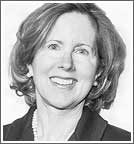
Heather Mac Donald

Heather Mac Donald is the Thomas W. Smith Fellow at the Manhattan Institute and a contributing editor of City Journal.  She earned a B.A. from Yale University, an M.A. in English from Cambridge University, and a J.D. from Stanford Law School. 

She writes for several newspapers and periodicals, including The Wall Street Journal, The New York Times, The New Criterion, and Public Interest, and is the author of four books, including The War on Cops: How The New Attack on Law and Order Makes Everyone Less Safe and The Diversity Delusion: How Race and Gender Pandering Corrupt the University and Undermine Our Culture (forthcoming September 2018)


The following is adapted from a speech delivered at Hillsdale College on April 18,2018, during a two-week teaching residency at Hillsdale as a Pulliam Distinguished Visiting Fellow in Journalism.

~ ~ ~ ~ ~ ~ ~ ~ ~


Our nation is about to be transformed, thanks to the #MeToo movement.   I am not speaking about a cessation of sexual predation in the workplace.  If that were the only consequence of #MeToo, the movement would clearly be a force for good.  Unfortunately, its effects are going to be more sweeping and destructive.  #MeToo is going to unleash a new torrent of gender and race quotas throughout the economy and culture, on the theory that all disparities in employment and institutional representation are due to harassment and bias. 

The resulting distortions of decision-making will be largely invisible; we will usually not know of the superior candidates for a job who were passed over in the drive for gender parity.  But the net consequence will be a loss of American competitiveness and scientific achievement.

Pressures for so-called diversity, defined reductively by gonads and melanin, are of course nothing new.  Since the 1990s, every mainstream institution has lived in terror of three lethal words: “all white male,” - an epithet capable of producing paroxysms of self-abasement.  Silicon Valley start-ups and science labs quake before the charge of being all or mostly male; their varied ethnic demographics earn them no protection from the diversity racket.

The New York Times
recently criticized the board of fashion giant H&M for being “entirely white.”  We can therefore infer that there are females on the H&M board, or else the Times would have let loose with the bigger gun: “all white male.”  When both categories of alleged privilege - white and male - overlap, an activist is in the diversity sweet spot, his power over an institution at its zenith.

But however pervasive the diversity imperative was before, the #MeToo movement is going to make the previous three decades look like a golden age of meritocracy. No mainstream institution will hire, promote, or compensate without an exquisite calculation of gender and race ratios. Males in general, and white males in particular, will have to clear a very high bar in order to justify further deferring that halcyon moment of gender equity.

Hollywood and the media are already showing the #MeToo effect. At this year’s Oscar awards lunch, the president of the Academy of Motion Picture Arts and Sciences, John Bailey, prefaced his remarks by noting that he was a “75-year-old white man.” Bailey was trying to get out ahead of the curve, since if he hadn’t pointed out this shameful status, feminist crusaders in the press and the industry would have done so for him. Witness actress Natalie Portman’s sneer in presenting the best director prize at the 2018 Golden Globe awards: “And here are the all-male nominees.” Such shallow bean counting is now going to become the automatic response to any perceived lack of “diversity” in entertainment.

Naturally, Bailey announced reparations for the Academy’s predominantly white male profile: henceforth it would “balance gender, race, ethnicity, and religion” in all its activities and would double its female and minority members by 2020. Needless to say, this was not enough. Outside the lunch, the National Hispanic Media Coalition protested the lack of proportional ethnic representation in Oscar nominations and acting roles.

CBS is considering only females to fill the anchor slot at Face the Nation, to catch up with The Today Show, which now has two female anchors.  The Recording Academy, which oversees the Grammys, has promised to overcome the “unconscious biases that impede female advancement” in the music industry, after bean-counting complaints from The Wall Street Journal’s pop music critic and female music executives.

The prospect of left-wing entertainment moguls having to sacrifice their box office judgment to identity politics is an unalloyed pleasure, and of little consequence to society at large.  But quota-izing will hardly be limited to Hollywood.

Major publishing houses are analyzing their author lists by gender and race and making publishing decisions accordingly.  What books get reviewed and who reviews them will increasingly be determined according to gender and race.  There are likely no major newspapers that are not tallying reporter and op-ed bylines, as well as the topics they cover, by gender and race.  In 2005, professional feminist Susan Estrich preposterously accused Michael Kinsley, then running the Los Angeles Times editorial pages, of excluding female writers.

Naturally, Estrich ignored the fact that males are disproportionately interested in public affairs, as demonstrated by lopsided sex ratios among op-ed submissions and letters to the editor.  Eighty-seven percent of contributors to Wikipedia are male.  There are no allegedly sexist gatekeepers at Wikipedia screening out females; contributions are anonymous and open to all.  But males are more oriented towards highly fact-based realms.

Now, however, sterile bean-counting exercises such as Estrich’s have gone in-house.  In response to the #MeToo movement, The New York Times created a “gender editor” who presides over a “gender initiative” to infuse questions of gender throughout all the Times’ coverage.  A recent front-page product of this #MeToo initiative covered the earth-shattering problem facing NFL cheerleaders: to wit, they have a dress code and are forbidden from fraternizing with the players.  Despite these allegedly patriarchal conditions, females are still lining up to be hired, to the puzzlement of the Times.

Publisher Meredith Corporation has come in for the usual criticism after buying the floundering Time, Inc. late last year.  “They’re basically all middle-aged white males from the Midwest,” grumbled a Time staffer, who, you would think, would be in no position to complain.  Dow Jones, the publisher of The Wall Street Journal, is offering leadership training exclusively to females to try to meet its short-term goal of 40 percent female executives.

Corporate boardrooms, executive suites, and management structures are going to be scoured for gender and race imbalances.  Diversity trainers are already sensing a windfall from #MeToo.  Gender, diversity, and inclusion were the dominant themes at this January’s World Economic Forum in Davos, Switzerland.  The conference was chaired exclusively by women.

Windows were emblazoned with slogans like “Diversity is good for business” and “Gender equality is a social and economic issue.”  CEOs shared their techniques for achieving gender equity.  It’s actually quite simple: pay managers based on their record of hiring and promoting females and minorities, as Hilton CEO Christopher Nassetta explained.  Never mind the fact that by introducing irrelevant criteria such as race and gender into an evaluation process, you will inevitably end up with less qualified employees.

U.S. banks and financial institutions are facing pressure from shareholder groups to release data on the number and compensation of females and minorities in their upper ranks. Immediate punishment befalls anyone in business who has the courage to criticize this war on merit.  The chief creative officer of the advertising firm M&C Saatchi wrote last year that he was “bored of diversity being prioritized over talent.”  Saatchi atoned for this heresy with a frenzy of female hirings and promotions.

Amazingly, John Williams - a white man - squeaked into the presidency of the Federal Reserve Bank of New York this April, to the outrage of the diversocrats.  Don’t be surprised if he is the last to do so.  “The New York Fed has never been led by a woman or a person of color, and that needs to change,” announced New York Senator Kirsten Gillibrand.  Williams’ “progress,” as The New York Times called it, in “diversifying” senior leadership when he was president of the San Francisco Fed undoubtedly made his unfortunate race and sex more palatable to the search committee.

#MeToo enforcers are even going after classical musicNew Yorker music critic Alex Ross triggered outrage against the Chicago Symphony Orchestra and the Philadelphia Orchestra in February when he tweeted that they had programmed no female composers in their 2018-2019 seasons.  Never mind that the CSO was even then performing Jennifer Higdon’s Low Brass Concerto - a piece commissioned by the Chicago, Philadelphia, and Baltimore orchestras - at Carnegie Hall.  It is ludicrous to suggest that these institutions are discriminating against female composers, but Ross and his followers demand affirmative programming quotas.

The public radio show, Performance Today, ran a series of shows in March about gender and racial inequities in classical music.  At a time of diminishing classical music audiences, it is profoundly irresponsible to direct the poison of identity politics at our most precious musical institutions.  Doing so only encourages potential young listeners and culturally ignorant philanthropists (I’m thinking of you, Bill Gates) to stay away.

Facts are facts, and throughout most of music history, the greatest composers have been male.  No amount of digging through score archives, however useful that enterprise may be for discovering unfamiliar works, is going to unearth a female counterpart to Bach, Mozart, Beethoven, Schubert, Chopin, or Brahms.  So what?  We should simply be grateful - profoundly grateful - for the music these men created.

Orchestra boards will pay penance for their own inadequate diversity by a mad rush on female conductors, whose numbers are minuscule.  It was already difficult two years ago to land a U.S. conducting position for a universally esteemed white male conductor, reports his agent.  Now it would be nearly impossible, the agent believes, adding: “If I had a trans(gender) conductor, I would be rich.”

Academia, the source of identity politics, will double down on its diversity quota-izing in the wake of #MeToo.  A panel at the annual American Economic Association meeting in January charged that gender discrimination was pervasive in economics - an argument that fit into the “larger national examination of bias and abuse toward women in the work force,” The New York Times reminded readers.  In March, the Chronicle of Higher Education and Priya Satia, former diversity chair of Stanford University’s Department of History - went into diversity meltdown over a history conference that Hoover Institution Fellow Niall Ferguson had organized.  Though Ferguson had invited females to speak, none had accepted.

Not good enough, according to Professor Satia.  Ferguson should have suspended the conference entirely unless he could persuade females and minorities to participate.   Although Satia did not identify any scholarly gaps that resulted from the actual lineup, Stanford University was so shaken by the controversy that it issued a statement on behalf of the president and provost assuring the public that it had made its concerns about the lack of diversity known to the conference organizers.

STEM departments - departments of Science, Technology, Engineering, and Math - have been under enormous pressure from the federal government to hire by gender and race. Now they are creating their own internal diversity enforcers, notwithstanding the massive diversity bureaucracies already in place.  UCLA’s Engineering Department now has its own diversity dean.  Audrey Pool O’Neal, the director of UCLA’s Women in Engineering program, justified this sinecure with the usual role model argument for gender- and race-conscious decision-making.  “Female students let me know how much they appreciate seeing a woman of color in front of their classroom,” she told the UCLA student newspaper.

Why not appreciate seeing the most qualified scholar in front of your classroom?  Any female student who thinks she needs a female professor in order to envision a scientific career has declared herself a follower rather than a pioneer - and a follower based on a characteristic that is irrelevant to intellectual achievement.  Marie Curie did not need female role models to investigate radioactivity.  She was motivated by a passion to understand the world.  That should be reason enough for anyone to plunge headlong into the search for knowledge.

Silicon Valley is a #MeToo diversity bonanza waiting to happen.  It’s not for nothing that the Mountain View headquarters of Google is referred to as the “Google campus” - the culture of the Silicon Valley behemoth is an echo chamber of shrill academic victimology.  Managers and employees reflexively label dissenters from left-wing orthodoxy as misogynists and racists.  It is assumed that the lack of proportional representation of female, black, and Hispanic engineers at the company is due to bias on the part of every other type of engineer.

In August 2017, Google fired computer engineer James Damore for writing a memo suggesting that the lack of 50-50 gender proportionality at Google and other tech firms may not be due to bias, but rather to different career predilections on the part of males and females.

He cited psychological research establishing that on average, males and females are attracted to different types of work: males to more abstract, idea-centered work - females to more human-centered, relational activities.  Damore was not disparaging the scientific skills of the female engineers working at Google; he was trying to explain why there were not more of them.  Nevertheless, Google accused Damore of using harmful gender stereotypes that put Google’s female employees at risk of some unspecified trauma.

Google’s adoption of the bathetic rhetoric of academic victimology to justify firing Damore was bad enough.  But in January 2018, the National Labor Relations Board released a memo upholding Google’s action on the same grounds: Damore had engaged in discrimination and sexual harassment by employing “harmful gender stereotypes.”

The reasoning behind the NLRB memo puts at risk the job of every academic scientist researching the biological and psychological differences between the sexes.  The ideological imperatives of feminism are trumping the search for scientific truth.  This is a dangerous position for a society to embrace.

The following month, a Google recruiter challenged Silicon Valley’s quota mentality by refusing to obey an edict to purge white males from consideration for entry-level engineering interviews.  The recruiter alleges in a lawsuit that he was promptly fired.  Google, it seems, would rather not be informed about potentially groundbreaking tech talent if it comes in the wrong color and shape.

Such distortions of meritocracy will become even more intense following #MeToo.  The mad rush of investor funding into the biotech fraudster firm Theranos was undoubtedly due in large part to the sex of its founder.  Elizabeth Holmes claimed to have invented an advanced blood-testing device.  Even as her claims about the largely fictitious device unraveled, investors continued to give her unqualified support.  Her blue chip board boasted two former secretaries of state and James Mattis, then head of the U.S. Central Command and now Secretary of Defense.

Hilariously, the #MeToo-obsessed New York Times opined that it was “surprising” how long Holmes was allowed to operate “before regulators stepped in.”  Actually, what is surprising is that they stepped in at all, given the dominant narrative that the dearth of female start-ups is due to sexism on the part of venture capitalists and regulators.

Despite the billions of dollars that governments, companies, and foundations have poured into increasing the number of females in STEM - the gender proportions of the hard sciences have not changed much over the years.  This is not surprising, given mounting evidence of the differences in interests and aptitudes between the sexes.  Study after study has shown that females gravitate towards different types of jobs than men, as James Damore fatally observed.  Females on average tend to choose fields that are perceived to make the world a better place, according to the common understanding of that phrase.

A preschool teacher in the Bronx, profiled by Bloomberg News, exemplifies such a choice. She has a B.A. in neuroscience, but opted not to go to medical school so as to have an impact on poor and minority children.  Her salary is a pittance compared to what she could earn as a clinical or research neurologist, but she said that pay is not her top motivation when it comes to choosing a job.

Even under the broad STEM umbrella, females seek jobs that are seen as directly helping others by a two-to-one ratio over males.  Females make up 75 percent of workers in health-related jobs, but only 25 percent of workers in computer jobs, and 14 percent of engineering workers, according to a Pew Research Center poll. 

In 2016, nearly 82 percent of obstetrics and gynecology residents were female - yet no one is complaining about gender bias against males.  And in a resounding blow to the feminist narrative about bias in STEM, it turns out that the more gender equality in a country, the lower the percentage of females in STEM majors and fields.  The more careers open to females, the less likely they are to choose math or science.

Finally, there is the most taboo subject of all: the non-identical distribution of high-end math skills.  Males outnumber females on both the bottom rung of math cluelessness and the top rung of math insight.  In the U.S., there are 2.5 males in the top .01 percent of math ability for every female in that category.  This is not a matter of gender bias and cultural conditioning; gender differences in math precocity show up as early as kindergarten.

Given these different distributions of interests and skills, the only way to engineer gender proportionality in the hard sciences is to put a ceiling on male hires, no matter how gifted, until enough females can be induced to enter the field to balance out the males. 

And indeed, the National Science Foundation, which has announced that progress in science requires a “diverse STEM workforce,” seems to be moving in that direction.  This is undoubtedly good news for China, as it furiously pushes ahead with its unapologetically meritocratic system of science training and research.  Not such good news for the rest of us, however.

The #MeToo movement has uncovered real abuses of power.  But the solution to those abuses is not to replace valid measures of achievement with irrelevancies like gender and race.  Ironically, the best solution to sexual predation is not more feminism, but less.

By denying the differences between men and women, and by ridiculing the manly virtues of gentlemanliness and chivalry and the female virtues of modesty and prudence - feminism dissolved the civilizational restraints on the male libido.  The boorish behavior that pervades society today would have been unthinkable in the past, when a traditional understanding of sexual propriety prevailed.  Now, however, with the idea of “ladies and gentlemen” discredited and out of favor - boorishness is increasingly the rule.

Contrary to the feminist narrative, Western culture is in fact the least patriarchal culture in human history.  Rather than being forced to veil, females in our society can parade themselves in as scantily clad a manner as they choose; pop culture stars flaunt their promiscuity.  As we have seen, every mainstream institution is trying to hire and promote as many females as possible. 


As the #MeToo movement swells the demand for ever more draconian diversity mandates, a finding in a Pew Research Center poll on workplace equity is worth noting: the perception of bias is directly proportional to the number of years the perceiver has spent in an American university.  The persistent claim of gender bias, in other words, is ideological, not empirical.

But after #MeToo, it will have an even more disruptive effect.

~ ~ ~ ~ ~ ~ ~ ~ ~ ~ ~ ~ ~ ~ ~ ~ ~ ~ ~ ~ ~

Let's all strive to Make America Great Again - by putting the best, most qualified people in the jobs best suited to their talent and abilities.  Let's not hamper America's progress by striving to put a square peg in a round hole.

God bless, have a wonderful, blessed day,

Bill


Friday, May 4, 2018

Calvinism, Arminianism ~ OR ~ Biblical Salvation?

Recently on Facebook, a Christian brother from Georgia, Paul, posted this question:

I have a question to my Christian friends.  I have been debating on a thread with Calvinist believers.  One thing I don't seem to be able to express to them properly is that I understand all of the salvation verses to say that - we must believe in order to be saved.

The people with whom I have been debating say that Jesus makes us born-again - and THEN we believe.  From the way I understand their posts, they say that God calls those whom He chooses and gives them the gift of grace.  And, then they start believing in Jesus Christ.  They say that we "cannot" believe unless God gives it to us.

My understanding is that we can believe or not believe.  That God does not force us to choose Him.  But the way they explain it, we "don't" have a choice.  If God gives us His grace, we will believe ~ and if He doesn't give it to us, we won't believe because we cannot.

Any thoughts?  I seem to be a blend of the two philosophies.

Hi Paul, You seem to feel that you are a blend of those two doctrinal extremes, Calvinism and Arminianism.  Most likely you are like me, sitting in the middle between the two.  I cannot accept the Calvinist version of Predestination, that the God I worship would create billions of humans "in His image" - without allowing them a choice for eternal life, that He would condemn them to hell with no opportunity to choose eternal life in Christ.

And I cannot accept the Arminian's paranoia that some unknown little sin might sneak up on me and take away my salvation.  The Arminian folks have no sense of Eternal Security - because they do not believe the promises of Jesus Christ.  In other words, when Jesus Christ promises Eternal Life to all who follow Him (1 John 5:12, John 10:27-29, etc.) - in what the Arminians teach, that is not true.  If that Arminian doctrinal belief is true, then Christ must have lied.  And there is no way I will ever believe that the Savior who died for me - is a liar.

So, doctrinally I sit in the middle.  But, does that mean that I believe Calvinist and Arminians are not saved.  Absolutely not.  A true believer who is Calvinist or Arminian is just as saved as you and me.

The difference is their views on Eternal Security.  When I ask the Calvinist, "Since you say that God chose the Elect, i.e., those who will be saved, before the Creation - and there is absolutely nothing YOU can do to be saved - HOW can you know that YOU are saved?"  

I have never had a Calvinist yet, pastor or lay persons, who could, or would, give a viable answer that question.

Most often they just reply, "I just know" - and that cannot be true.   For that would be "them" deciding on an issue which, according to their doctrines, God decided before the Creation.  How can they truly know what God decided about them, individually, before the Creation?  

The only way a person could know what God decided about him/her as an individual before the Creation - is if God has given that person a special, personal revelation.  And I have never had a Calvinist confirm such a special revelation.  Therefore, according to TULIP or the euphemism, Doctrines of Grace - they cannot, of their own free will, decide to follow Jesus - or know that they are saved.

And, our poor Arminian brethren spend their whole Christian lives looking over their shoulder, for fear that some unknown sin will sneak up behind them and steal their salvation.  My Savior is not a liar.  He made us a promise of Eternal Life when we received Him as Lord and Savior - and nothing on earth or in heaven can make Him renege on that promise.

Paul, isn't it nice to be able to KNOW that we are children of God, joint heirs with Jesus Christ, and that we WILL spend eternity in His presence?

Now THAT is Eternal Security!  


~ ~ ~ ~ ~ ~ ~ ~ ~ ~ ~ ~ ~ ~ ~ ~ ~ ~ ~ ~ ~ ~ ~

Let me offer a blog I originally posted in February 2016 and then, at a Friend's request, again in December 2016.  It is titled "
Calvinism, Arminianism, And Salvation! ~ Revisited" and offers a more detailed discussion on those beliefs:


Calvinism, Arminianism, And Salvation! ~ Revisited
http://billdory-christian-ministries.blogspot.com/2016/12/calvinism-arminianism-and-salvation.html

I pray that you will find this useful in your understanding of these doctrinal beliefs.  And it will help you to KNOW that, if you are a believer, a follower of Jesus Christ - you HAVE Eternal Life in Christ and no one, absolutely NO ONE, can take that from you.

God bless, have a wonderful, blessed day,

Bill 


Monday, April 30, 2018

Church Ordinances Vs Church Sacraments - From Christ Or From Man? ~ Revisited

WHAT IS A CHURCH ORDINANCE?  Based up what church you attend, there is often confusion between Ordinances and Sacraments in the church today.  What is the difference?   And, are they binding upon Christian believers?

Before we really get into the meat and potatoes of Ordinances and Sacraments, it might be helpful in you will take a moment and listen to this beautiful Gospel song,  "It's Not What's Over The Door (Of The Church You Attend)."   I believe the words of this song explains how God sees His family, His church, much better that I can explain it in writing.

https://www.youtube.com/watch?v=LrrEnUIXX_s&t=9s

Now, moving on to the meat and potatoes:


Sacraments in the Roman Catholic, Eastern Orthodox, Anglican, Lutheran, and a few other liturgical and/or ritualistic Protestant denominations are seen as a means of attaining and keeping God's grace and salvation.  The seven sacraments are baptism, confirmation, holy communion, penance (confession), marriage, holy orders (ordination), and anointing of the sick. 

According to the Roman Catholic Church: “There are seven sacraments. They were instituted by Christ and given to the Church to administer. They are necessary for salvation. The sacraments are the vehicles of grace which they convey.”   In the Catechism of the Roman Catholic Church, "The sacraments are efficacious (effective) signs of grace, instituted by Christ and entrusted to the Church, by which divine life is dispensed to us" (#1131).


Ordinances
in most Protestant churches are symbolic expressions of our faith, not a means of attaining, keeping, or losing God's grace.   In the Bible, as interpreted by the majority of Protestant churches, Jesus Christ left only two ordinances for all believers:


Baptism
, where we follow Him in symbolic death and resurrection as we publicly declare our eternal commitment to Him as members of His family


~ AND ~


Communion
, which we do to symbolically remember His sacrifice on the cross when He suffered and died to offer eternal life and salvation to all who will follow Him.


Baptism and communion are separate from grace and are not means to it.  The rituals of the church do not confer grace, and they cannot merit salvation.  It would be more proper to say the ordinances are the "signs of grace" ~ not the means of grace.

Water baptism
is not a means of grace - it is the "outward expression of an inner change."  It is an act of obedience (accomplished) after salvation has occurred.  The examples of water baptism in Scripture all show that baptism happened after the person was born again (e.g., Acts 8:26-39).  Being immersed in water cannot change a person’s heart; that is the Holy Spirit’s work.  “The Spirit gives life” (2 Corinthians 3:6).  Crucial to our salvation is faith in the heart, not water on the skin.


Communion
, or the Lord’s Supper, is not a means of grace - it is a memorial of Christ’s once-for-all sacrifice and a picture of our fellowship with Him.  At the Last Supper, when our Lord shared the Passover with the disciples, He said, “This is my body given for you; do this in remembrance of me (Luke 22:19). 

Jesus was telling them (and us) not to forget His sacrifice on the cross.  It was Christ’s death that provided the remission of mankind’s sin.  ("What is the difference between ordinances and sacraments?" -

www.gotquestions.org/ordinances-sacraments.html
)   

[underline, italic, and parenthetical emphasis is mine]

And,

What is an ordinance?  
It is not a sacrament (a church ritual that is thought to have saving values).  The Bible clearly states that through Christ alone we are saved (Ephesians 2:8-9, Acts 4:12, Titus 3:5).  It is a command to be obeyed (cf. "City Ordinance").  It works no grace or special spiritual operation. 

The two church ordinances are visible enactments of the Gospel message that Christ lived, died, was raised from the dead, ascended to heaven, and will some day return.  Put simply, the church ordinances are visual aids to help us better understand and appreciate what Jesus Christ accomplished for us in His redemptive work.


How is an Ordinance determined? 
Three distinguishing marks characterize the New Testament ordinances:
  • They were instituted by Christ.
  • They were taught by the apostles.
  • They were practiced by the early church.
www.new-testament-christian.com/ordinancebaptismandcommunion.html

Where in the Bible did Jesus Christ institute the two ordinances? 

Baptism:  Matthew 28:18-20 tells us, "Then Jesus came to them and said, ‘All authority in heaven and on earth has been given to me. Therefore go and make disciples of all nations, baptizing them in the name of the Father and of the Son and of the Holy Spirit, and teaching them to obey everything I have commanded you.  And surely I am with you always, to the very end of the age.’”


Communion:  Also called the Lord’s Supper, Luke 22:19 tells us, “And he took bread, gave thanks and broke it, and gave it to them, saying, ‘This is my body given for you; do this in remembrance of me.’”  

How often should a church fellowship celebrate Communion, and in what manner?

It would seem that, since we take the Lord’s Supper to remember Christ’s death, we should take it fairly often.  Some churches have a monthly Lord’s Supper service; others do it bi-monthly; others weekly.  Since the Bible does not give us specific instruction as to frequency, there is some latitude in how often a church should observe the Lord’s Supper. 

It should be often enough to renew focus on Christ - without being so often that it become routine.  In any case, it’s not the frequency that matters but the heart attitude of those who participate.  We should partake with reverence, love, and a deep sense of gratitude for the Lord Jesus, who was willing to die on the cross to take upon Himself our sins.  ("How often should the Lord's Supper / Communion be observed?" -
www.gotquestions.org/Lords-Supper-observed.html)

And,

How often should the Lord's Supper be celebrated?  Scripture does not tell us.  Jesus simply said, "As often as you eat this bread and drink the cup. . ." (1 Corinthians 11:26).  Paul's directive here regarding worship services would also be appropriate to consider: "Let all things be done for edification" (1 Corinthians 14:26). 

In actuality, it has been the practice of most of the church throughout its history to celebrate the Lord's Supper every week when believers gather.  However, in many Protestant groups since the Reformation, there has been a less frequent celebration of the Lord's Supper, sometimes once a month or twice a month, or, in many Reformed churches, only four times a year. 

If the Lord's Supper is planned and explained and carried out in such a way that it is a time of self-examination, confession, and thanksgiving and praise, then it does not seem that celebrating it once a week would be too often, however, and it certainly could be observed that frequently "for edification."    ("The Lord's Supper," from "Bible Doctrine, Essential Teachings of the Christian Faith " - Chapter Twenty-Eight, Pages 387-394 - by Dr. Wayne Grudem)

I have been in Filipino-American Baptist churches for the past thirty years, and all have celebrated the Lord's Supper on a monthly basis.  On the first Sunday of each month, at the end of our normal worship service and before leaving the fellowship, we find that partaking of the Lord's Supper gives us spiritual strength to enable us to stand firm in our Christian faith as we go back into the secular world around us.   

We pass the elements to all believers, pastor reminds us Scripturally what we are doing and why we are celebrating this ordinance.  Then we, together, take the elements in remembrance of Him (Luke 22:19).

If the Lord's Supper is celebrated only every three months, or once a year - are we saying that it is not really that important?  Once a month, to me, keeps His sacrifice fresh in my heart - whereas doing it weekly would tend to make it more of a ritual, done by rote.  If the Lord's Supper become only a ritual - are we missing out on that spiritual strength and on that great spiritual blessing?  Are we relegating the ordinance of the Lord's Supper to a lesser position of importance in our worship?

Considering the question of frequency of celebrating the Lord's Supper, which we do out of love of Him, and in obedience to the instructions He left us, I am reminded of a satirical story I have read and quoted before. 

An elderly farmer's wife is concerned about his affections toward her - and asks him, "Why don't you ever tell me you love me anymore?"  


The elderly farmer looked sternly at his wife and told her, "On the day we got married I told you I love you.  If I ever change my mind, I will tell you."  

Do we view our love toward our Lord Jesus Christ the same way?

Once, for a special occasion, Dory and I attended a large non-denominational church in the Corona area.  When time for Communion, the Lord's Supper, came - the ushers passed the elements to us.  And we were told beforehand by the pastor to go ahead and just do our own private celebration of the Lord's Supper when we received the elements. 

There was no pastoral devotion, no sharing about the meaning of this ordinance - just, "When you receive your elements go ahead and do it yourself."  Not celebrating the Lord's Supper in fellowship with all other believers present, to me, relegated it to the level of, "Have as cup of coffee."

At the same time that this individual Lord's Supper event was happening, on a large display screen in the sanctuary we were viewing a baptism which was occurring in some other part of the building.  It was as though they were telling us, "These are the two ordinances.  But for expediency sake, and to save time - we will have both simultaneously.  Just watch the screen as your take Communion by yourself."  Somehow I just did not feel any spiritual connection with either event.   

There are other questions regarding the Lord's Supper besides timing and method.   Who should participate in the Lord's Supper?  Can visitors to your local church participate with you?  Can only Baptists share the Lord's Supper in your Baptist church?  

So, let's clear the air. On the Day of Pentecost 33 AD, Jesus Christ instituted His church, His body of believers - which has grown to His body of believers worldwide.  He did not institute the Baptist church, the Roman Catholic church, the Methodist, Lutheran, Presbyterian, Nazarene, or any other denominational church - only His church - His body of believers worldwide.  

So, who should take Communion, the Lord's Supper, with us?  Answer:  Every
born-again believer who has joined us for worship, regardless of which denominational hat he/she wears.  We are sharing His Supper with His family of believers - not just our local church family, but for all present who believe and have received Him as Lord and Savior.

In many Southern Baptist churches they have what they call "closed communion" - meaning that only members of that local church fellowship may participate in the Lord's Supper.  Some even go so far as to say that only believers who have been baptized in that church may participate.  I fully agree with the pastors who, while explaining the meaning of communion, tell us that only those who are believers should partake of communion - for this is the Lord's Supper meant only for those in His family.

So, if you are not a believer, not in the family of God, you should not participate.  However, whether you participate of not should be left up to you, the individual, not the pastor nor the church.  For only you and God know if you are a true believer.  If you are not a believer and participate just to give it a try, to see if anything spiritual happens when you take the elements - one day you will have to explain, face-to-face, to Jesus Christ why you mocked His Lord's Supper.  But, once again, that is between you and God. 

Should a pastor tell people in the worship service, especially visitors, that they cannot participate in the Lord's Supper?  No, for Jesus Christ has invited ALL in His family to participate - not just members of that local church, not just baptized Baptists who can display letters of membership in a local Baptist church - but ALL in the family of God. 

Is Baptism a prerequisite for receiving Communion?  If you answer yes, then you are saying that baptism is a requirement for salvation - which goes against the teaching of Ephesians 2:8-9, that we are "saved by grace through faith" alone.   Such a prerequisite for Communion would be a validation of the false teaching of Baptismal Regeneration, i.e., that we are saved through baptism. 

And, if Baptismal Regeneration is true - then the thief on the cross was not saved.  Yet, Jesus Christ told him, "Truly I say to you, today you shall be with Me in Paradise"  (Luke 23:43).  Was Jesus Christ wrong - or are we, and the thief on the cross, truly "saved by grace through faith" - alone?

I pray that my thoughts on Ordinances vs Sacraments has been helpful to you.  I would love to hear your thoughts on this.

God bless, have a wonderful, blessed day,

Bill

Wednesday, April 25, 2018

We All Learn From Another ~ Who Is Your Role Model?

WE ALL LEARN FROM ANOTHER  ~  Whether Christian or secular, most often we learn from a role model or a figure of authority.  That can be a biological father or a father figure, i.e., step-father, close friend, etc. ~  or for a Christian believer, most often that role model is our pastor.  From our pastor (earthly father figure) we learn about theology, Christian relationships, and methods of doing church.

At the age of fifty, when I became a Christian believer in 1987, I found that I soon had two Christian role models in my life.  There was Pastor Sam Lacanienta who led me to the Lord, who taught me in my early Bible study endeavors, and who was always there as my pastor on Sundays and whenever my family needed him. 

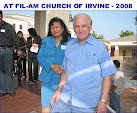
Very shortly after becoming a believer, I discovered KWVE (KWave) Christian Radio (107.9 FM), the radio ministry of Calvary Chapel Costa Mesa - and found that the theology I heard on KWVE aligned well with what I was hearing in our church, the Filipino-American Church of Irvine (CA), or FACI.

Since I began my spiritual walk with the Lord under the tutelage and guidance of Pastor Sam Lacanienta - it is natural that I would be drawn to the theology he shared and his way of doing church.  Even though all Baptist churches are autonomous, the Fil-Am Church of Irvine basically got its theology and church leadership model from two sources: 

First
, Pastor Sam, who was a graduate of FEBIAS (Far Eastern Bible Institute and Seminary, later changed to FEBIAS College of Bible) - had worked in the Philippines with Far East Broadcasting Company (FEBC) in its music and teaching ministries - and had pastored a church in the Philippines before coming to America.


Secon
d, our Fil-Am Church of Irvine was and is an affiliate of the Baptist General Conference. 

The Baptist General Conference (renamed Converge in 2015) is a national association of autonomous evangelical churches that began in the Midwest in 1879.  The BGC (Converge) Baptists hold to inerrancy of the Bible, salvation by grace through faith, the necessity of the new birth, the autonomy of the local church, and believer’s baptism by immersion. 

Its Bethel Seminary was founded in 1871, is an accredited seminary with approximately 1,100 students from more than 70 denominations enrolled on campuses in St. Paul, Minnesota, San Diego, California, and its online InMinistry Distance Learning program, a blend of online and face-to-face coursework.

The BGC has remained true to its original doctrines of salvation by faith in Jesus Christ, water immersion as the only acceptable form of believer’s baptism, the inspiration and inerrancy of the Word of God, the reality of heaven and hell, and it continues to remain true to being evangelical, multi-ethnic, and committed to fulfilling the Great Commission (Matthew 28:16–20).

Over the past 30+ years that I have been a believer, I have mostly been involved in BGC affiliated Baptist churches.  On two occasions Dory and I have been involved in early start-up churches which were affiliated with the Southern Baptist Conference.  But I lean more toward the Baptist General Conference and their teachings.  Although the Southern Baptist churches are autonomous like the BGC churches, I personally find two major problems with their theology. 

First, over the past few decades, the Calvinist Movement has infiltrated the teachings of a large percentage of Southern Baptist churches - and is taught in a large number of their affiliated Seminaries.  Regardless of whether it is called "TULIP Calvinism" or "Doctrines of Grace Calvinism" - it is the same, only wearing a different euphemism hat.  And, basically I cannot find their definition of a Pre-Creation Predestination in my Bible.

And, second, many Southern Baptist churches hold to a "closed communion" where only members of that local church may receive the Lord's Supper - and I am firmly convinced that Jesus Christ meant for our symbolic remembrance of His sacrifice
(Luke 22:19-20, 1 Corinthians 11:23-25) to be done on a regular basis (most Baptist churches have communion monthly) and that it include ALL believers in the body of Christ.  I believe He would invite all His believers to join Him in the Lord's Supper - regardless of the name over the door of your church.  We are ALL told to take the Lord's Supper, together, in remembrance of Him.

We have to keep in mind that the church which was begun in the Upper Room by the Holy Spirit on the Day of Pentecost 33 AD - had no denominational name.  It was the Holy Spirit indwelled body of believers, period.  First were the 120 disciples in the Upper Room.  And within the following week it grew to over 5000 believers in Jerusalem. 

They were not Baptist, Lutheran, Methodists, Roman Catholic, etc..  They were just indwelled believers who made a decision to believe and follow Christ.  Initially, many antagonists began to call them followers of the Way.  And later, in Antioch, believers were given a derogatory name, Christians, meaning Christ followers.  Those who had rejected Him meant this as a derogatory and slanderous name - but we believers wear that name as a Crown of Glory.

At that time, if you could have asked any of those believers if they were
 Baptist, Lutheran, Methodists, Roman Catholic, etc. - they would have thought you to be deranged - for such "names" did not exist then.  And I agree with those early believers.  Don't call me by some man-created name.  Call me what I am - a Holy Spirit indwelled and sealed believer in and follower of Jesus Christ, aka, a Christian.

That is why when I am asked, I will tell folks I am a Baptist-flavored Christian believer.  Why do I describe myself that way?  Because 30+ years ago I became a believer and began studying the Bible.  And over the next few years I began to put my own personal Statement of Faith in writing, based upon my knowledge of the Bible.  Today, praise God, when I look at my personal Statement of Faith, I find that it aligns well with the General Baptist Statement of Faith.  Therefore I am a Baptist-flavored Christian believer - because I am in agreement with the Baptist Statement of Faith. 


During the years I was under the spiritual guidance of Pastor Sam Lacanienta in the Fil-Am Church of Irvine, I learned to admire him for reasons other than his theological teachings.  First, I admired the way he separated himself from the financial side of our church fellowship.   He considered himself the spiritual leader of our church - and not the financial officer.  He never got involved in the financial aspect of our church, leaving that completely to our Financial Elder, Fred Almeda. 

Pastor Sam felt strongly that he did not want to know who gave what in offerings or gifts to the church.  Why?  Well, first he considered the spiritual health of our fellowship to be more important and his main responsibility.  And, second, knowing that he has human frailties like all of us - he did not want to put himself in the position, either on purpose or inadvertently, of being more attentive to the people who gave larger offerings, than to those who gave less.  The only people in our church who knew how much, or when, a person gave - was our very discrete Financial Elder.

Pastor Sam has two rules that I believe are necessary to be a spiritual leader:  He stayed away from the financial function of our local church.  And, he would never counsel a female member without his wife, Ida, being in the same room.  He adhered firmly to these two rules - and because of that, no one could ever accuse him of any improprieties, financial or personal.

Pastor Chuck Smith at Calvary Chapel had a similar philosophy, not wanting to view people for what they gave financially - but instead relating to them spiritually.

At the Fil-Am Church of Irvine, offerings were taken by ushers quietly and somewhat discretely passing the offering plate across each row as we dropped our offering into the plate.  Then the offering plates were placed at the alter and later turned over to our Financial Elder.  A person gave as God had provided - and without fanfare or public display.

2 Corinthians 9:7-8, "So let each one give as he purposes in his heart, not grudgingly or of necessity; for God loves a cheerful giver.  And God is able to make all grace abound toward you, that you, always having all sufficiency in all things, may have an abundance for every good work."


Tithing is given as an example in the Scriptures as how individuals should respond to God's blessings.  Many individuals question whether the tithe is still applicable for believers today since we are not "under the law."  Despite that distinction, many believers consider it their privilege to give proportionately to the work of the Lord using the tithe as a pattern. 

Although churches are not given percentages in the New Testament, the principle of proportionate giving is given (1 Corinthians 16:2; 2 Corinthians 8).  The New Testament also records that the believers in the church were collecting to give to other ministries.  (Should A Church Tithe 10% Of The Offerings It Receives? - https://www.gotquestions.org/church-tithe.html)


For many years, Calvary Chapel Costa Mesa did not take pass the offering plate - preferring instead to have an offering box at the rear of the sanctuary where folks, upon entering or leaving the sanctuary, could discretely drop in their offering as the Holy Spirit led them.

Possibly the method of the offering plate and the offering box in the sanctuary comes from considering this Scripture passage. 
In the Sermon on the Mount, Jesus taught regarding the giving of alms:


Matthew 6:1-4, "Take heed that you do not do your charitable deeds before men, to be seen by them.  Otherwise you have no reward from your Father in heaven.  Therefore, when you do a charitable deed, do not sound a trumpet before you as the hypocrites do in the synagogues and in the streets, that they may have glory from men.  Assuredly, I say to you, they have their reward.  But when you do a charitable deed, do not let your left hand know what your right hand is doing, that your charitable deed may be in secret; and your Father who sees in secret will Himself reward you openly."


The context suggests that the injunction to “not let your left hand know what your right hand is doing” refers to giving alms in secret and stands in contrast with drawing attention to our giving.  Those who give in order to receive accolades from others have already received their reward (Matthew 6:2).  God will reward those who give in secret.  ("What Does It Mean That We Should Not Let Our Left Hand Know What Our Right Hand Is Doing (Matthew 6:3–4)?"https://www.gotquestions.org/left-hand-know-right-hand-doing.html)


I don't recall the source, but I remember reading an article written by Pastor Chuck Smith where he shared about the early days when Calvary Chapel Costa Mesa was a new and fast growing fellowship and needed to expand into a larger facility.  Pastor Chuck had found a property in Costa Mesa but did not know how they would pay for it.  He tells of how he would drive to the property in the evening, sit in his car, and pray for God to provide a way for them to buy this property to build a larger church.  History shows that God surely answered his prayers.

About that same time, he also tells of a wealthy man who offered to give the church one million dollars.  Pastor Chuck made a decision to not accept his gift.  Why?  Because one person giving a million dollars to the church - might come later seeking special favors.  He did not want Calvary Chapel under such an obligation to any person - preferring instead to allow God to bring in many smaller gifts from His people. 

And we know that God honored that prayer - for we see how Calvary Chapel, under the hand of God and with the earthly tutelage of Pastor Chuck Smith, grew from the initial sixteen member Calvary Chapel in 1965 - to the Calvary Chapel Movement of thousands of Calvary Chapel churches and Christian schools we see worldwide today.

In the book written by Pastor Chuck Smith and Tal Brooke titled "Harvest" - which is the story of the growth of Calvary Chapel Ministries I have taken these excerpts:


Calvary Chapel never asks for money.  We avoid pressuring our members for "faith pledges" - and no appeal for funds is ever made over our radio or television outreaches.  Our feeling is that begging for money brings discredit to God.  Financial integrity is central to this ministry.  So much so that all of the staff salaries are considered low by usual standards.  I limit myself and my family to a simple lifestyle, while my ministry has enabled me to oversee millions of dollars.  I want to be responsible to God for this money, for it is His money, not mine.  I am merely a steward.  This is important to me because I know that nonbelievers will be watching, and we are responsible for the way we witness to them.  (Harvest, pages 14-15)

And,


At Calvary Chapel we have confidence that when God guides, God provides - so there is never an emphasis on money or giving.  Many of our churches do not even pass the plate, but place a box at the entrance where the people who desire may contribute.  God is never represented as being broke or facing imminent bankruptcy.  The pastors have been taught that God is perfectly capable of supplying the needs for the things He desires to see accomplished.  God does not need the support of His people to stay in business, the people need the support of God.

It is sad to see people driven away from the church by the appeals and gimmicks that have been used to solicit funds.  Some have dropped out of church because they had nothing to give and felt embarrassed.  We do not let this happen to them at Calvary Chapel because they are never asked to give or to pledge.  As the apostle Paul said, never let your giving be by pressure or constraint, but let every man give as he has purposed in his own heart, for God loves a cheerful giver.  (Harvest, page 175) 


On a different but very important subject
, both Calvary Chapel and our Fil-Am Church of Irvine had an informal way of doing Bible Studies, Prayer Meetings, and Evening Services.  What developed at Calvary Chapel began in a Corona church where Chuck Smith was the pastor, before leaving to join Calvary Chapel which at that time was only sixteen members.  He tells of how that change came about:


That very night the Sunday evening church service had been unusually joyous and positive.  (Because) I stepped out and took a chance.  I departed from traditional procedure and tried something that involved everyone.  We decided to change the format from the traditional song service, announcements, prayer, and sermon to a more informal kind of a gathering. .  .  .

So having arrived early, my wife and I arranged the chairs in a circle rather than in a row.  Rather than using the hymnal, we worshiped the Lord in singing choruses.  Then we went into a time of prayer.  And many people who had been bound (in their prayer life) were able to open up and pray.  It was a very special experience for them.  And then, of course, I shared in a more informal way from the Word of God, sitting there and teaching, more as I would within an intimate home fellowship rather than the traditional church setting.  (Harvest, pages 17-18)


Pastor Chuck explains the evolution of the Bible studies and teachings methods at Calvary Chapel:


The importance of having home Bible studies was an invaluable lesson.  In these home Bible studies I developed a whole new style of teaching.  Rather than the Sunday oratory style, I would just sit and talk in a very natural way.  They (the Bible study group) would feel the freedom to interrupt when they did not understand a particular passage or interpretation of the passage, and it would turn into animated discussions

I found that their attention span was increased.  In church after thirty minutes of preaching people were restless.  But we could sit for an hour-and-a-half to two hours in the home and then the people would actually be disappointed that I stopped.


Later on when we started Calvary Chapel, we started several home Bible studies.  The one on Monday night was geared for the young people and I would more or less "rap" (chat) with them as we sat in the living room of a home in Costa Mesa.  The group soon became so large that we no longer fit in the home.  Kids were sitting in the dining room, kitchen, up the stairway, in the entry hall, and there would be more outside who couldn't get in.


Bill Gray Note:
  In late 1998, when Dory and I moved to Riverside County and became members of the Fil-Am Church of Corona - they had no Bible study.  I suggested to our pastor that a church without Sunday School and Bible study is like a three-legged stool with two legs missing.  Dory and I started a Bible study in our apartment and for the first couple of months the only consistent participants were Myra, Cory (pastor's wife), and pastor's two young boys.  When he could, pastor joined us. 

After a few months, others began to come - and pretty soon the Bible study outgrew our apartment and moved into Tony and Myra Alagao's home.  Over the years, that Bible study became large enough that it was split into four home Bible studies.  So, I can relate to what Pastor Chuck is telling us.


We were, at that time, building our first chapel.  The slab had been poured, so at night we would set up lights and the kids would sit on the slab and I would sit there with them.  We just built the chapel walls up around them as time went on.  It was during this time that we began to reach hundreds of the young people who had been involved in the hippie culture.  They loved the informality of sitting outside and having the teacher just sit there and talk with them rather than preach at them.


From these informal talks I developed the style of teaching in a natural, almost conversational way.  (In worship services) I just talk with the congregation about the things of God, of the glories of His nature, of His Kingdom.  I found that if I'm talking - rather than preaching - the attention span holds for an hour as they sit with open Bibles learning God's Word.  A half-hour of preaching can wear people out, but an hour of teaching, if it's done in an easy conversational way, does not.   (Harvest, pages 173-174)

Our Bible studies at FACI were very similar, a more informal lesson taught in an interactive mode.  Pastor Sam taught, but we were not allowed to just sit and listen.  He asked questions, encouraged comments, and made sure we were participants in the study - not just quiet observers

Later Pastor Sam, who was burdened with pastoring two churches at that time (in Irvine and in Long Beach) as well as leading four Bible studies each week - decided to assign the burden of leading our Bible studies to four of our more spiritually mature men, Elders, at FACI.  Doing that, it became obvious that the best method was to have a fully interactive Bible study where we took turns reading Scripture, verse by verse, in a passage or book, and discussing each verse or passage, as appropriate.  That same style of Bible study was adopted in each of our daughter churches which Pastor Sam planted.

In the late 1990s, Dory and I were in the hospital with the flu and being husband and wife, we were in the same room, where we had a male nurse the first few days.  When he saw me studying my Bible he asked if I was a pastor - and I assured him that was not my calling from God.  Even though he was Caucasian he was interested when I told him about our Filipino-American Baptist churches.  When he told me he lived in Long Beach and wanted to know how to find our Fil-Am Church of Long Beach - I could not give him the information he needed to find our church - and, by the next day, when I had gathered that info to give to him - he was no longer working on our floor.  I felt bad, as though I had let him and God down.

Disappointed in myself for not having that information readily available, when I got home from the hospital I made a church tract which listed all of our Fil-Am churches in Southern California.  The collage below shows the back of that tract listing full info on each of our churches.  Never again was I going to be caught being negligent, not being able to share about our churches or His Word. 

Pastor Sam and Ida Lacanienta left some 12+ years ago to follow their hearts in full time ministry in their Philippine homeland.  And since then Ida has been promoted to glory - while Pastor Sam, at 82, is still very active in ministry as pastor of the Talakag Church on the Solid Rock, Talakag, Bukidnon, Philippines, and running a Christian camp at Cagayan de Oro in Northern Mindanao, Philippines.

I recall a story I read in Our Daily Bread, Fall 1991 issue.  It was written by Henry Bosch and tells of a missionary to the Kiowa Indians.


The first missionary to the Kiowa Indians was a woman named Miss Reside.  After living with the Indians long enough for them to know what it meant to be a Christian, they began calling her "Aim Day Co."

Explaining the significance of this name, Chief Bigtree said, "When we Kiowas see anyone on the wrong trail, we call out, 'Aim day co,' which means 'Turn this way.'  Our sister came to us from a far land and found us on the wrong path and in great danger.  She stood and called to us and said, 'Turn this way.'  Then she showed us the Jesus road.  God bless Miss Aim Day Co."


The Lord Jesus declared that there are only two paths to take in life.  One is the narrow way that ascends to life eternal; the other is the broad way that descends to the pit of destruction (Matthew 7:13,14).  And He said that He is "the Way."


Jesus has not promised an easy life, the world's praise, or great material riches for following Him.  But, He richly rewards those who take the narrow road.  He forgives their sin, gives them eternal life, and assures them that they will go to heaven.


Miss "Aim Day Co" did not stay in her comfort zone; she went to where the Indians lived, she went to their comfort zone.  I'm quite sure she did not start beating them over the head with non-stop Scripture or demand that they learn her "Christianese" language.  No, I'm sure that she first learned how to tell them, in their own language, "Turn this way!  Aim day co!"


Everyone is an evangelist, a witness, an ambassador for the Lord.  With all earnestness, let's point others to Jesus.  Like Miss Aim Day Co, let's urge people, "Turn this way!"

I am eternally grateful that God has given me these very special role models as I continue in my Christian walk.  I pray that in some small way, I, too, may be able to help others find the Eternal Way.

God bless, have a wonderful, blessed day,

Bill 

Click on the image to enlarge: